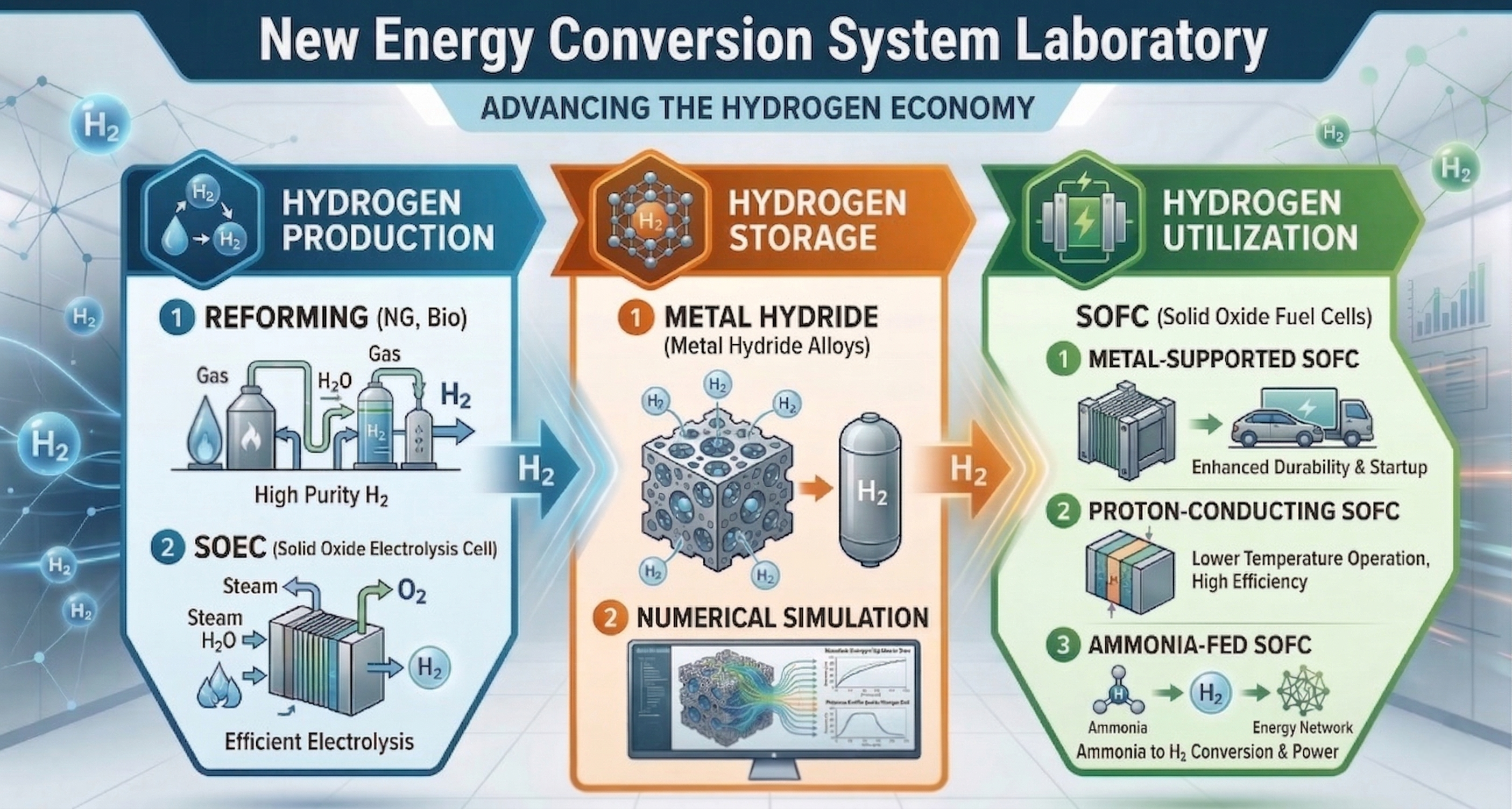
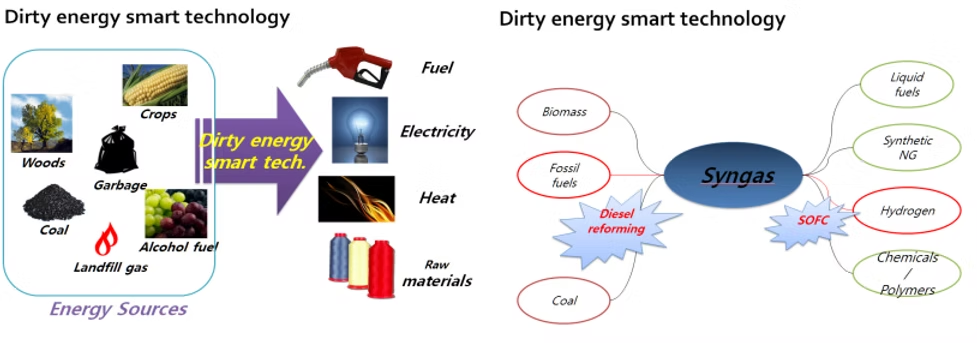
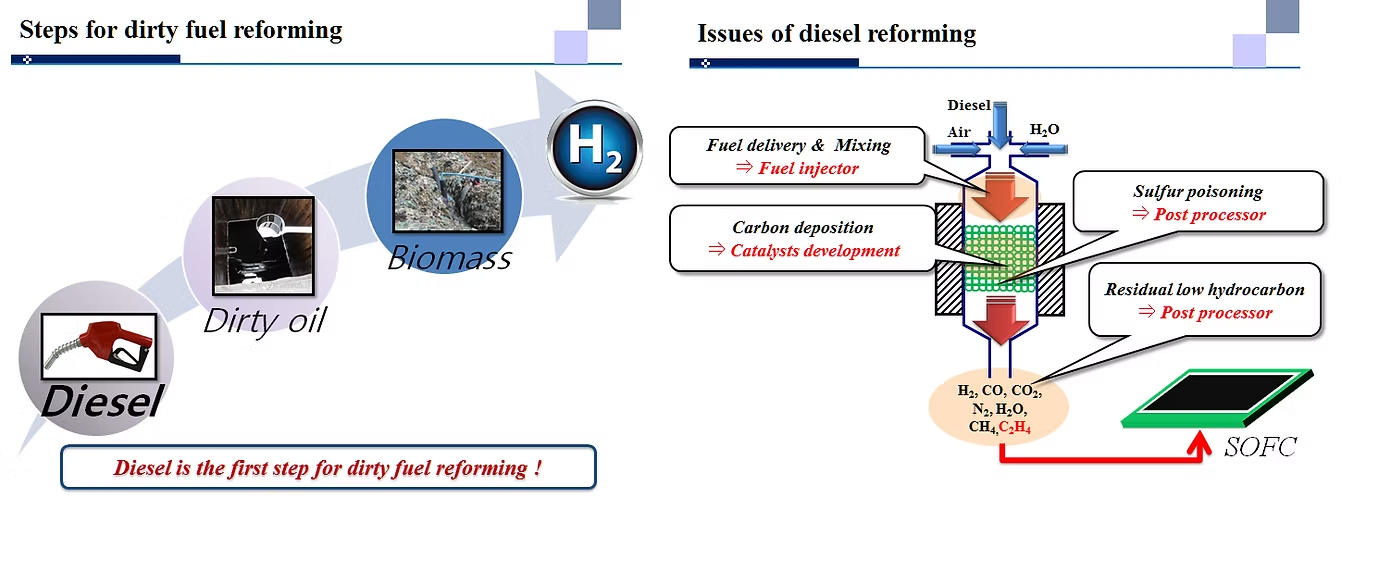
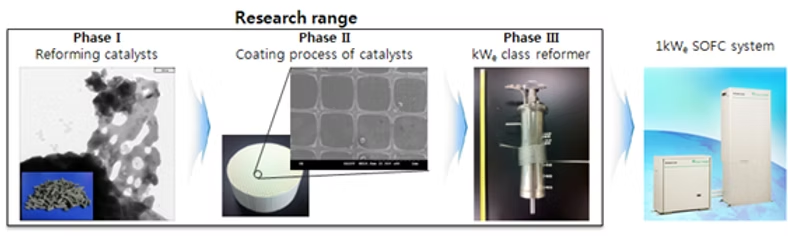
SOFCs can use various fuels like methane, natural gas and biogas. The popular anode material of SOFCs is Ni-YSZ (yttrium-stabilized zirconia) cermet. One of the major challenges in SOFC anode is sulfur poisoning problem. When use the fuels including sulfur-containing compounds like hydrogen sulfide, performance of the Ni-YSZ cermet anode is degraded by sulfur poisoning. In addition, Ni-YSZ cermet anode is damaged when oxidation and reduction cycle is repeated. To prevent sulfur poisoning and redox problem and, many researchers make an effort to develop sulfur-tolerant and redox-stable anode materials. So, we are researching oxide catalysts for using anode materials.
One of disadvantages of SOFCs is their mechanical strength. Ceramic supported SOFCs are weak and they can be failed by mechanical load. It can be supplemented by applying metal support. The sealing issue is another disadvantage of ceramic support SOFCs, but it can be solved easily using metal support by welding its boundary. Therefore, it minimizes sealants usage in SOFC stack fabrication, and this allows SOFCs to be applied to various applications including transportation facilities such as vessels and automobiles.