Research
Among the various technologies that convert hydrogen back into electricity, the Solid Oxide Fuel Cell (SOFC) stands as the most efficient conversion system yet invented. Our research focuses on enhancing the structural integrity and long-term durability of SOFCs to expand their practical applicability across diverse fields, particularly within the heavy-duty and mobility sectors.
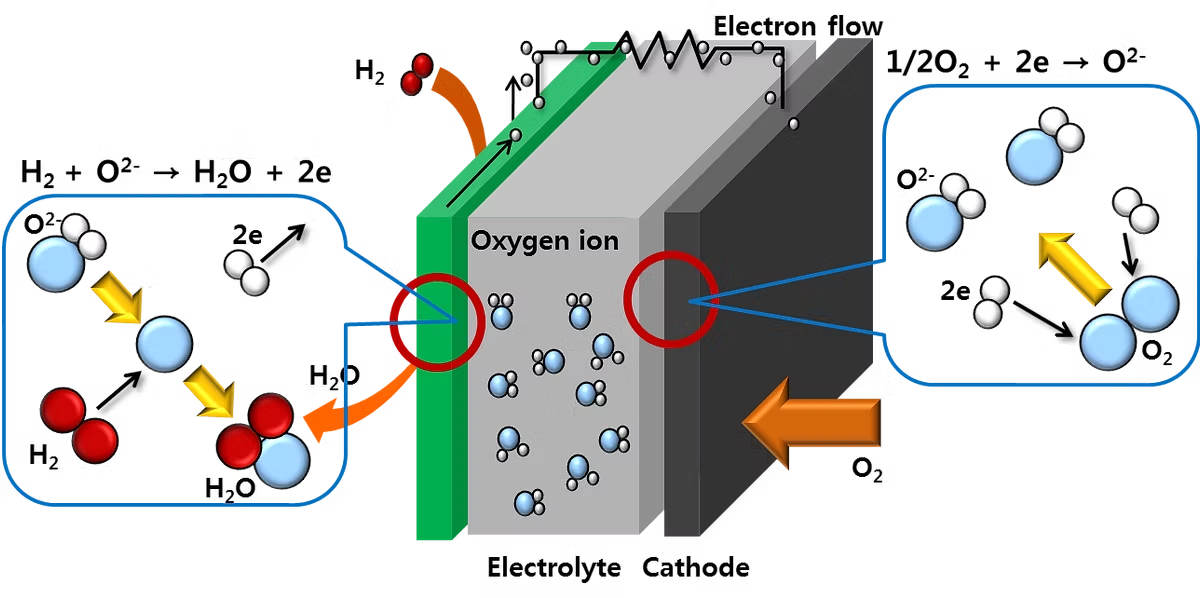
SOFCs are highly efficient devices that convert chemical energy directly into electrical power through a precise electrochemical process. Operating at high temperatures (600–1000°C), the system utilizes a solid ceramic electrolyte that acts as a conductor for oxide ions. Oxygen is ionized at the porous cathode, migrates through the electrolyte to the fuel-rich porous anode, and reacts with hydrogen to produce water and release electrons. This streamlined architecture—consisting of an electrolyte, anode, cathode, and interconnects—achieves an exceptional theoretical electrical efficiency exceeding 60%.
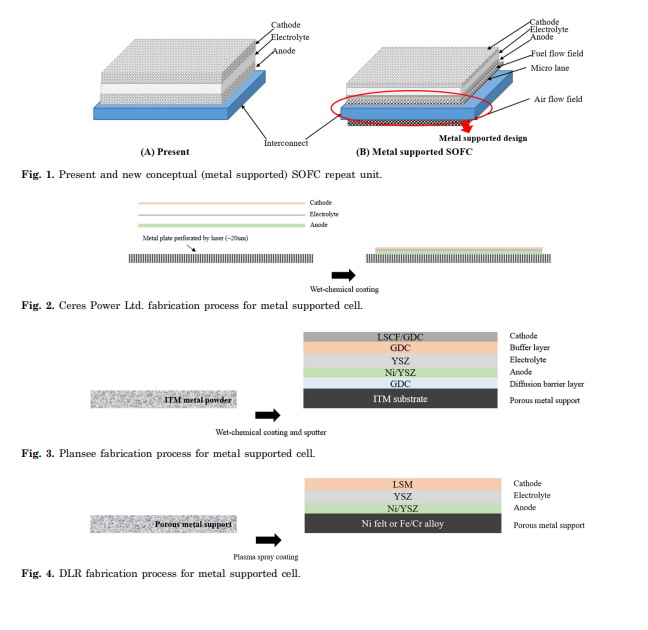
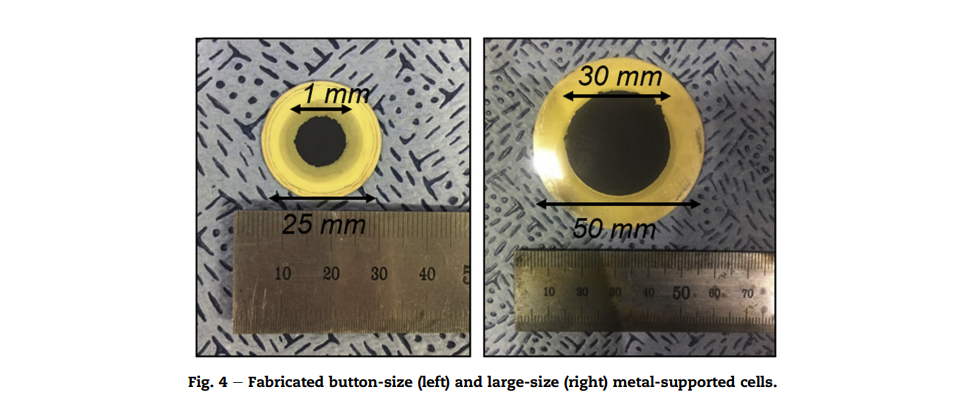
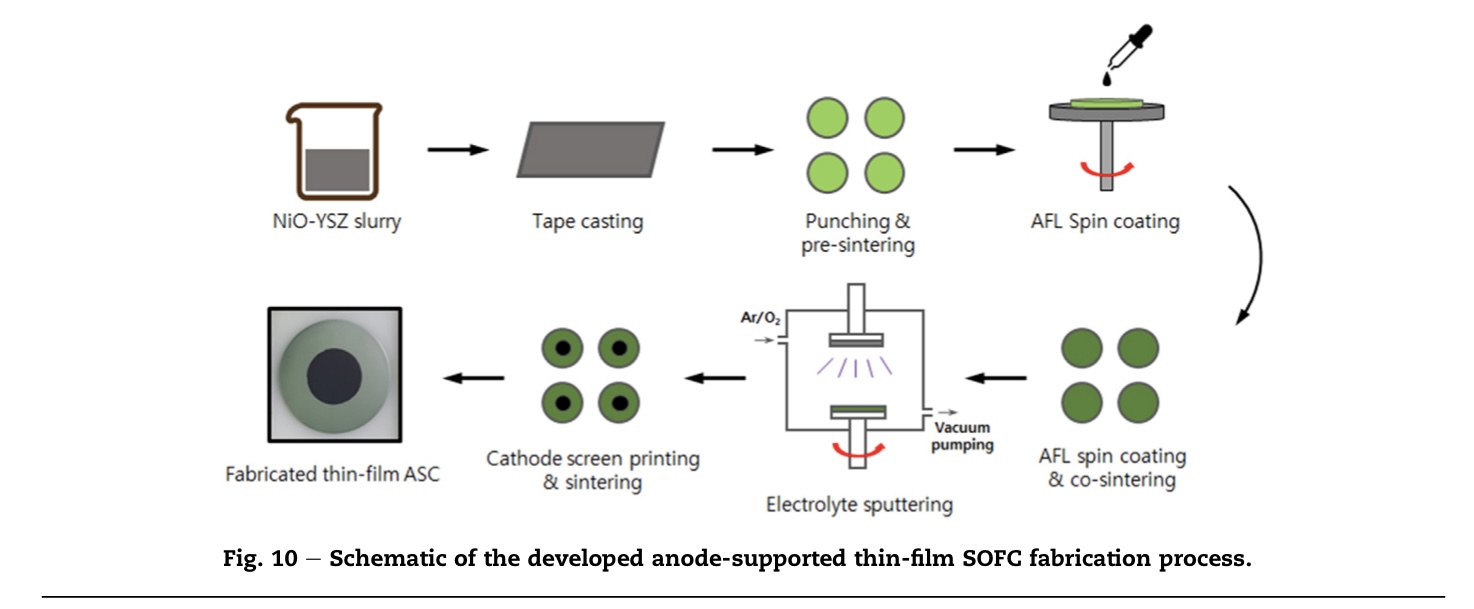
Conventional ceramic-supported SOFCs are susceptible to thermal shock and brittle fracture, limiting their use in mobility applications where rapid temperature fluctuations are common. To overcome these barriers, we lead the development of Metal-Supported SOFCs (MS-SOFC) by depositing thin-film electrolytes onto robust porous metal substrates.
Mobility-Ready Design: The ability to seal boundaries through welding solves chronic sealing issues and simplifies the SOFC stack fabrication process.
Future Applications: This inherent robustness allows SOFCs to be applied to various transportation facilities, such as vessels and automobiles
Sulfur & Redox Stability: The development of next-generation oxide catalysts for anode materials addresses the challenges of sulfur poisoning and performance degradation during repeated oxidation and reduction cycles.
Carbon Management: Research has identified ethylene as having a critical role in the carbon deposition process, which acts as a main barrier to feeding diesel to SOFC systems.
Long-term Stability: Specialized coatings for interconnects are developed to prevent corrosion, ensuring the long-term operational stability and durability of the fuel cell system.
Ammonia-fed SOFC: Utilizing SOFC’s fuel flexibility to directly power systems with ammonia enables efficient direct ammonia-to-electricity conversion by addressing anode durability and reaction kinetics.